Flowerhorn Grooming vs. Fish Health: A Complete Guide for Fish Keepers
Introduction
Flowerhorn fish are known for their bright colours, distinctive pearling and prominent head hump, commonly called the kok. To maintain their appearance and overall condition, fish keepers often focus on grooming, feeding and aquarium care. However, a Flowerhorn’s appearance alone does not tell you everything about its health.
Grooming-related practices may help maintain a suitable environment and support the fish’s natural appearance, but fish health depends on several factors, including water quality, nutrition, stress levels and disease prevention.
Understanding the difference between grooming and health care can help you recognise when your Flowerhorn is doing well and when it may need attention.
What Is Flowerhorn Grooming?
Flowerhorn grooming generally refers to the care routines fish keepers follow to maintain their fish’s appearance and condition. It should not involve physically manipulating the fish or using unproven products to change its body shape.
Common grooming-related practices include:
Maintaining clean aquarium water.
Providing a balanced and appropriate diet.
Keeping the aquarium free from unnecessary waste.
Providing enough swimming space.
Observing the fish’s colour, activity and normal behaviour.
Maintaining a stable aquarium environment.
These practices support general care. They do not guarantee a larger kok, stronger pearling or a particular colour pattern because these traits can also be influenced by genetics, age and individual development.
What Is Flowerhorn Fish Health?
Fish health refers to the overall physical condition and normal functioning of your Flowerhorn. A healthy fish generally displays normal swimming behaviour, an appropriate appetite and no obvious signs of injury or illness.
Important factors that influence Flowerhorn health include:
Water quality: Ammonia and nitrite should remain at undetectable levels, while nitrate should be controlled through appropriate maintenance.
Nutrition: Feed a suitable, balanced diet in appropriate portions.
Oxygenation and filtration: Ensure adequate water movement, oxygen and effective biological filtration.
Temperature stability: Maintain a suitable temperature for your particular Flowerhorn and avoid sudden changes.
Stress management: Reduce unnecessary disturbance and provide an appropriate aquarium setup.
Disease monitoring: Watch for changes in appetite, swimming, breathing, skin, fins or waste.
Good health care focuses on preventing problems and identifying potential illness early rather than changing the fish’s appearance.
Flowerhorn Grooming vs. Fish Health: Key Differences
Flowerhorn Grooming | Flowerhorn Fish Health |
|---|
Focuses on routine care and maintaining appearance | Focuses on overall well-being |
Includes observation and aquarium cleanliness | Includes water quality, nutrition and disease prevention |
May help support natural colour and condition | Helps maintain normal body functions and behaviour |
Does not guarantee kok growth or pearling | Cannot be judged by appearance alone |
Should use safe, non-invasive care practices | May require appropriate treatment when illness occurs |
Important: Grooming and health care are connected. Proper maintenance can support good health, but no grooming routine can compensate for poor water quality or an unsuitable diet.
Signs Your Flowerhorn May Be Healthy
Observe your Flowerhorn regularly and learn what is normal for that individual fish.
1. Normal Swimming Behaviour
A healthy Flowerhorn is generally alert and swims in a coordinated manner. Repeatedly lying on the bottom, losing balance or struggling to swim can indicate a problem.
2. Consistent Appetite
A stable appetite is generally a positive sign. However, appetite can vary with age, temperature, stress and other factors, so a single missed meal does not automatically indicate illness.
3. Clear Eyes and Intact Fins
Look for obvious cloudiness, unusual swelling, damaged fins, sores or other visible changes. These signs should be assessed alongside the fish’s behaviour and water conditions.
4. Stable Colour and Appearance
Colour can change with lighting, mood, stress and development. A sudden or persistent change, especially alongside other symptoms, deserves attention.
5. Normal Breathing
Watch the gill movements. Rapid breathing, gasping at the surface or unusual difficulty breathing can be associated with poor water conditions, low oxygen or illness.
Common Grooming Mistakes Flowerhorn Owners Should Avoid
1. Chasing a Bigger Kok at Any Cost
A prominent kok is a characteristic many Flowerhorn enthusiasts appreciate, but its development varies between individual fish. Avoid unverified supplements, extreme feeding routines or treatments promoted as guaranteed kok-growth solutions.
2. Overfeeding for Faster Growth
Excess food can contribute to digestive problems and deteriorating water quality. Feed suitable portions and remove uneaten food rather than increasing feeding simply to accelerate growth.
3. Ignoring Water Quality
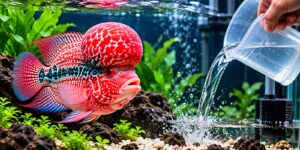
Clear-looking water is not necessarily safe water. Test the aquarium when appropriate, maintain the filter and perform regular partial water changes based on the tank’s needs.
4. Using Unnecessary Chemicals
Do not use medications, colour-enhancing chemicals or other products without understanding their purpose and risks. Treatments should be selected for a specific, well-supported need.
5. Handling the Fish Unnecessarily
Avoid catching, holding or physically manipulating your Flowerhorn for cosmetic purposes. Unnecessary handling can cause stress and may damage its protective slime coat.
How to Maintain Both Appearance and Health
A consistent care routine is more useful than trying to change the fish’s appearance quickly.
Check the fish daily: Observe its appetite, swimming, breathing and general appearance.
Maintain water quality: Test water parameters as needed and keep ammonia and nitrite at undetectable levels.
Feed appropriately: Choose suitable food and adjust portions according to the fish’s size, age and condition.
Keep the aquarium clean: Remove uneaten food and waste, and maintain the filtration system.
Avoid sudden changes: Keep temperature and other environmental conditions stable.
Respond to symptoms: If unusual behaviour or physical changes persist, investigate water conditions and seek advice from a qualified aquatic veterinarian when necessary.
When Should You Be Concerned About Your Flowerhorn?
Some changes require more attention than routine grooming.
Watch for:
Persistent refusal to eat.
Rapid breathing or gasping.
White spots, open sores or unusual growths.
Clamped or deteriorating fins.
Loss of balance or difficulty swimming.
Abdominal swelling or unusual waste.
Sudden behavioural changes or persistent hiding.
These signs do not identify a specific disease on their own. Check water quality promptly, avoid random medication and seek qualified help if symptoms are severe or continue.
Conclusion
Flowerhorn grooming and fish health are related, but they are not the same thing. Grooming should focus on safe, consistent care rather than cosmetic shortcuts. Healthy water, suitable nutrition, stable aquarium conditions and regular observation are the foundations of responsible Flowerhorn keeping.
Instead of judging your fish only by its kok size, pearling or colour, pay attention to its behaviour and overall condition. A healthy Flowerhorn is supported by good daily care, not by appearance-focused practices alone.
Frequently Asked Questions