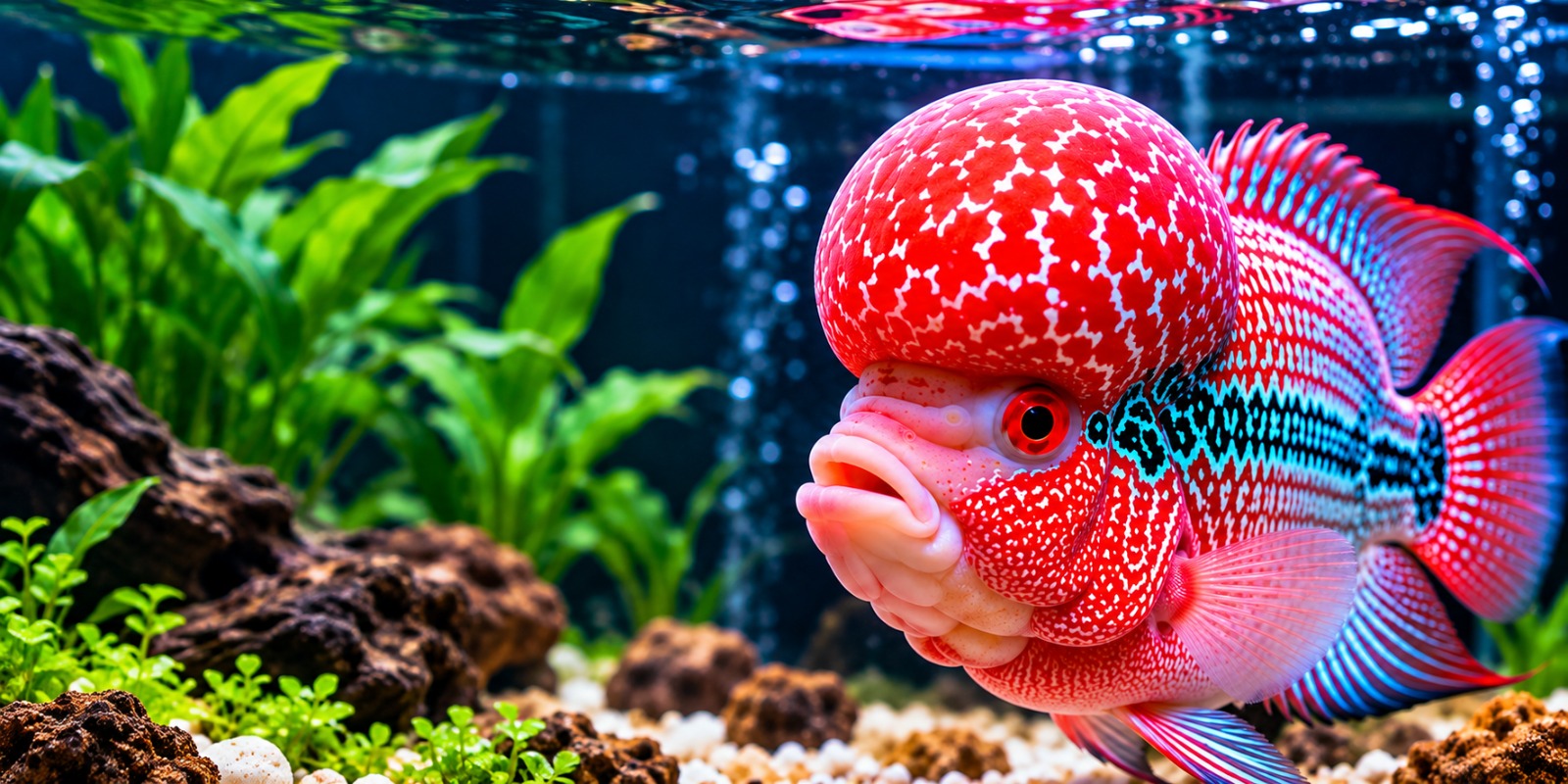
Flowerhorn grooming is one of the most discussed topics among Flowerhorn keepers. Some people believe grooming can completely transform a fish, while others think genetics are everything. The truth is somewhere in the middle.
Grooming can help your Flowerhorn show its natural potential, improve its confidence, and make it look healthier and more active. But grooming cannot create genetics that the fish does not have. You cannot guarantee a huge kok, perfect pearls, or amazing color just by using mirrors, special food, or lighting.
The biggest mistake is treating grooming like a shortcut.
If you want to groom your Flowerhorn properly, you need to understand what actually helps the fish and what simply creates unnecessary stress.
Here are five important grooming secrets every Flowerhorn owner should know.
1. Genetics Come Before Grooming
This is probably the most important secret.
Before talking about food, mirrors, lighting, water changes, or anything else, you need to understand your fish’s genetic potential.
A Flowerhorn may have excellent genetics for kok development, color, pearls, body shape, or overall appearance. Another fish may have weaker potential in one or more of these areas. No grooming method can completely change that.
This is why you should never buy a Flowerhorn only because it has a big head at a young age. A large kok can look impressive, but it doesn’t automatically mean the fish will develop the body, color, pearls, or overall appearance you want.
The same applies to parent photos. Parents can give you some information about the bloodline and possible traits, but they are not a crystal ball. Two young fish from similar parents can develop very differently.
So when you start grooming, your goal should not be to “create” a great Flowerhorn.
Your goal should be to help your Flowerhorn reach the potential it already has.
This changes the entire way you approach grooming.
Instead of constantly trying new tricks, you focus on providing the right environment, nutrition, water quality, and low-stress routine.
That is the foundation.
2. Water Quality Is Part of Grooming
Many Flowerhorn owners think grooming means making the fish aggressive, using mirrors, changing lighting, or giving special food.
But one of the most powerful grooming tools is something much less exciting:
Clean and stable water.
Your Flowerhorn spends its entire life inside the aquarium. Every day, it is exposed to the water around it. If the water quality is poor, the fish has to deal with that stress continuously.
This can affect appetite, activity, coloration, growth, and general condition.
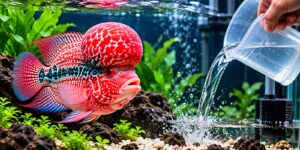
Good grooming starts with proper filtration and regular maintenance. You should monitor important water parameters instead of assuming that clear-looking water is automatically healthy.
Ammonia and nitrite are especially important because they can become dangerous even when the aquarium looks visually clean.
Don’t wait until your fish looks sick before checking the water.
Another important point is stability. Constantly making large changes to the aquarium can create unnecessary stress. Your Flowerhorn does not need a completely different environment every few days.
A stable aquarium gives the fish a chance to settle, eat properly, recover from daily stress, and behave naturally.
So if someone tells you that grooming is all about making your Flowerhorn aggressive, remember this:
A stressed fish is not a well-groomed fish.
A healthy fish should come first.
3. Food Should Support Growth, Not Force It
Food is another major part of grooming, but this is where many owners go too far.
Some people believe that feeding more food will automatically make a Flowerhorn grow faster and develop a bigger kok.
That’s not how it works.
Your Flowerhorn needs a suitable, balanced diet, but more food does not always mean better growth.
Overfeeding can create problems. Uneaten food can pollute the aquarium, excessive feeding can contribute to poor water quality, and the fish may become overweight instead of developing a balanced body.
The goal should be proper nutrition rather than maximum feeding.
Use quality Flowerhorn food and vary the diet when appropriate. Depending on the fish and feeding plan, suitable foods can include quality pellets and appropriate frozen or live foods.
Watch how your fish responds to the food.
Is it eating with interest?
Is its body condition healthy?
Is the aquarium staying clean?
Is the fish active after feeding?
These observations are more useful than simply counting how many pellets you can feed in a day.
And don’t believe every supplement or “kok booster” claim you see online.
Supplements may have a role in a properly managed diet, but they cannot replace genetics, water quality, good nutrition, and proper care.
There is no magic food that can guarantee a massive kok.
Feed intelligently, not excessively.
4. Mirrors and Exercise Should Be Used Carefully
Now we come to one of the most popular Flowerhorn grooming methods: the mirror.
Many owners use a mirror to encourage their Flowerhorn to flare, display, and become more active.
A short and controlled interaction can be interesting to observe, but the important word here is controlled.
Keeping a mirror in front of your Flowerhorn for hours is not automatically better.
If the fish constantly sees another fish inside its territory, it may remain in a defensive or aggressive state for too long. Instead of being useful stimulation, it can become continuous stress.
Watch your fish carefully.
If your Flowerhorn becomes extremely stressed, repeatedly attacks the glass, stops eating, hides, breathes unusually fast, or behaves abnormally after the session, stop and give it time to settle.
Remember that grooming should improve the fish’s condition, not exhaust it.
The same idea applies to interaction with your fish.
You can encourage natural movement by giving the Flowerhorn enough space to swim and explore. A suitable aquarium size and good water movement can help maintain normal activity.
But you don’t need to constantly provoke your fish to make it look aggressive.
A Flowerhorn that calmly swims around the aquarium, eats well, responds to you, and behaves normally can be a much healthier fish than one that is constantly flaring at a mirror.
Grooming should have a purpose.
Don’t turn every interaction into a competition.
5. Lighting and Environment Can Change the Appearance
The final secret is something many owners underestimate: the environment can dramatically change how your Flowerhorn looks.
The same fish can appear completely different under different lighting.
Color temperature, brightness, background, aquarium surroundings, and even the position of the light can affect how you see the fish’s colors and pearls.
This doesn’t mean that a particular light will magically create color.
Lighting can enhance the appearance of traits that are already there, but it cannot replace genetics.
This is especially important when comparing your fish with Flowerhorns you see online.
A seller or hobbyist may use carefully selected lighting, camera settings, backgrounds, and angles. Your fish may look completely different under normal room lighting.
That doesn’t necessarily mean your fish has lost its quality.
Instead of constantly changing the lighting, find a setup that makes the fish look good while still providing a sensible lighting schedule.
Your Flowerhorn also needs a comfortable environment.
Avoid constantly moving decorations, changing the aquarium layout, tapping the glass, chasing the fish, or making sudden environmental changes just because you want better photos or videos.
Your fish needs somewhere it can feel secure.
And this is where grooming becomes different from simply trying to make a fish look impressive.
A good grooming routine should make the fish healthy, active, confident, and comfortable.
The Biggest Grooming Secret of All
There is actually one idea connecting all five secrets:
Don’t groom your Flowerhorn more than you care for it.
It is very easy to become obsessed with kok size, color, pearls, and aggression.
You see another person’s Flowerhorn online and suddenly you want your fish to look exactly the same.
Then you start changing food.
You add supplements.
You increase feeding.
You put in a mirror.
You change the light.
You change the background.
You increase interaction.
You change the water.
And sometimes you do all of this within a few days.
But your Flowerhorn doesn’t need ten different changes.
It needs consistency.
Give it good water quality, proper filtration, suitable nutrition, enough space, appropriate lighting, and a low-stress environment. Then observe what your fish naturally does.
Every Flowerhorn develops differently.
Some develop a massive kok.
Some develop incredible pearls.
Some become extremely colorful.
Some have a beautiful body shape.
Some may not develop the way you expected, despite having excellent care.
And that’s okay.
The purpose of grooming should be to bring out the best version of your fish, not to force your fish to become someone else’s Flowerhorn.
Final Thoughts
Flowerhorn grooming isn’t about finding one secret trick.
It’s about understanding the fish.
Genetics determine potential.
Water quality supports health.
Nutrition supports growth and condition.
Controlled stimulation can encourage natural behavior.
Lighting and environment can enhance appearance.
But none of these things can replace good basic fishkeeping.
So before you ask, “How can I make my Flowerhorn’s kok bigger?” or “How can I make its color better?”, ask yourself a more important question:
“Am I already giving this fish the best environment possible?”
If the answer is yes, then you are already doing the most important part of Flowerhorn grooming.
And remember, a Flowerhorn doesn’t need to look perfect every day to be a great fish.
A healthy, active, comfortable Flowerhorn is always more important than a huge kok or perfect color.
That’s the real secret to grooming.