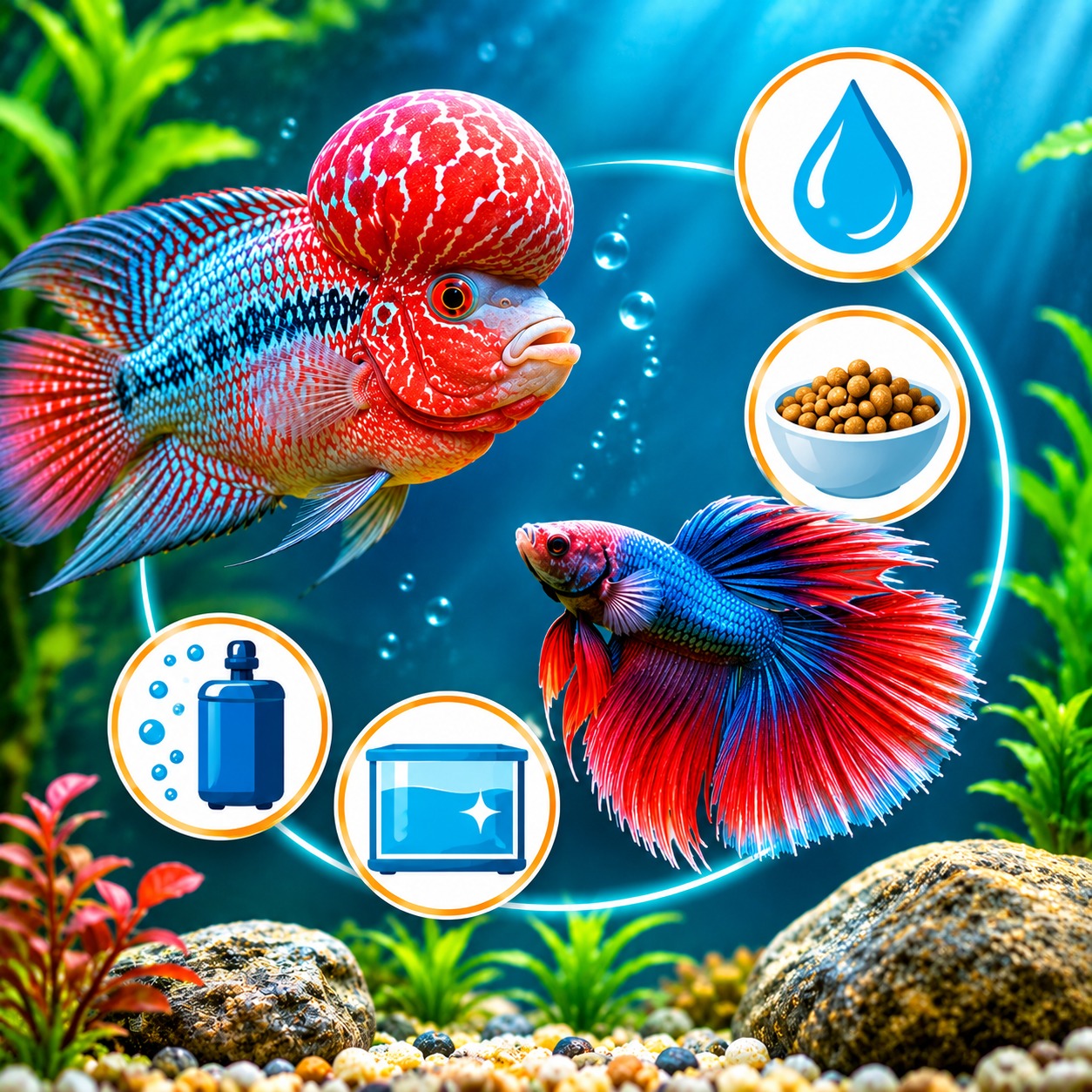
Setting up a healthy aquarium requires more than choosing beautiful fish and filling a tank with water. The right aquarium equipment helps maintain water quality, provides oxygenation, controls temperature and makes regular maintenance easier.
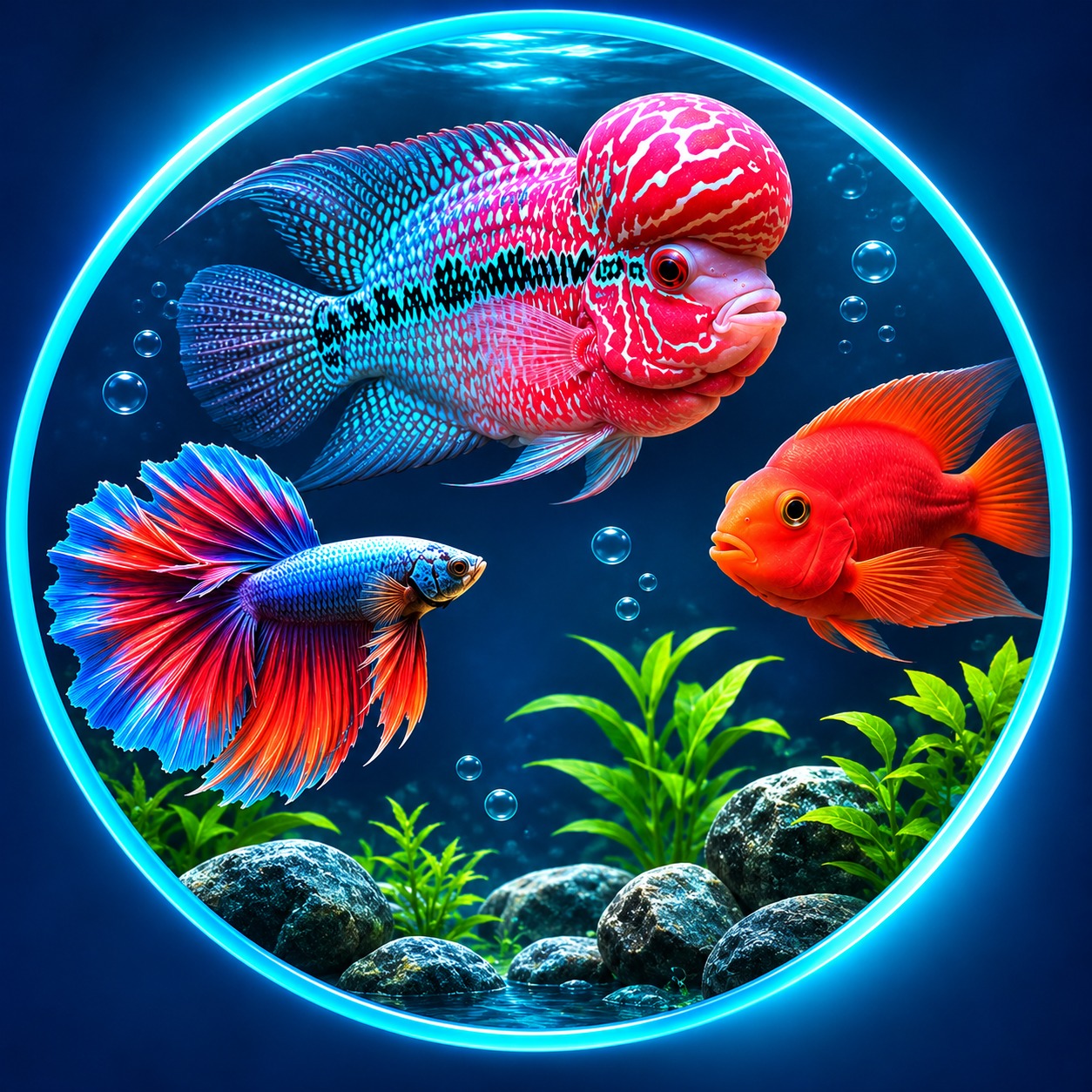
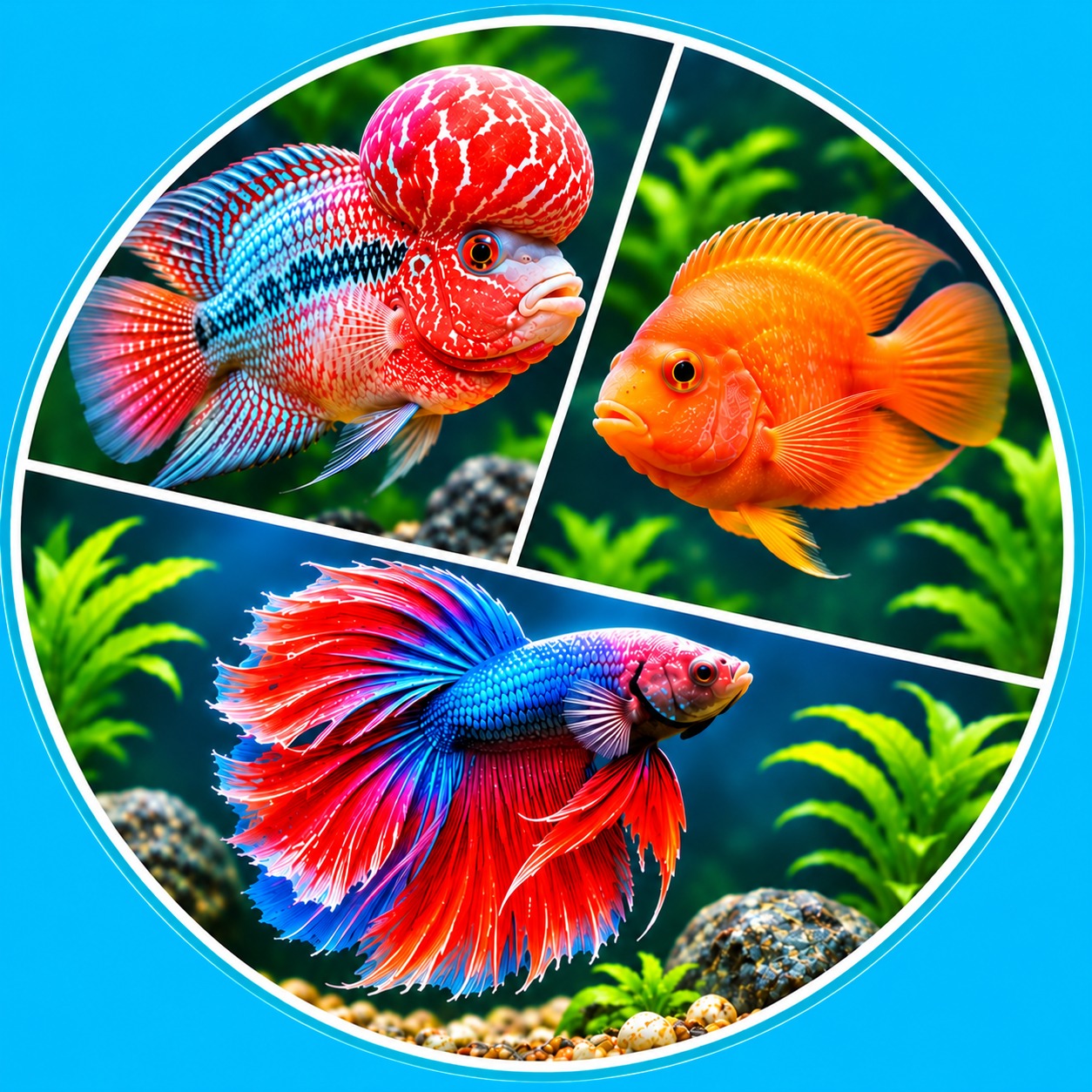
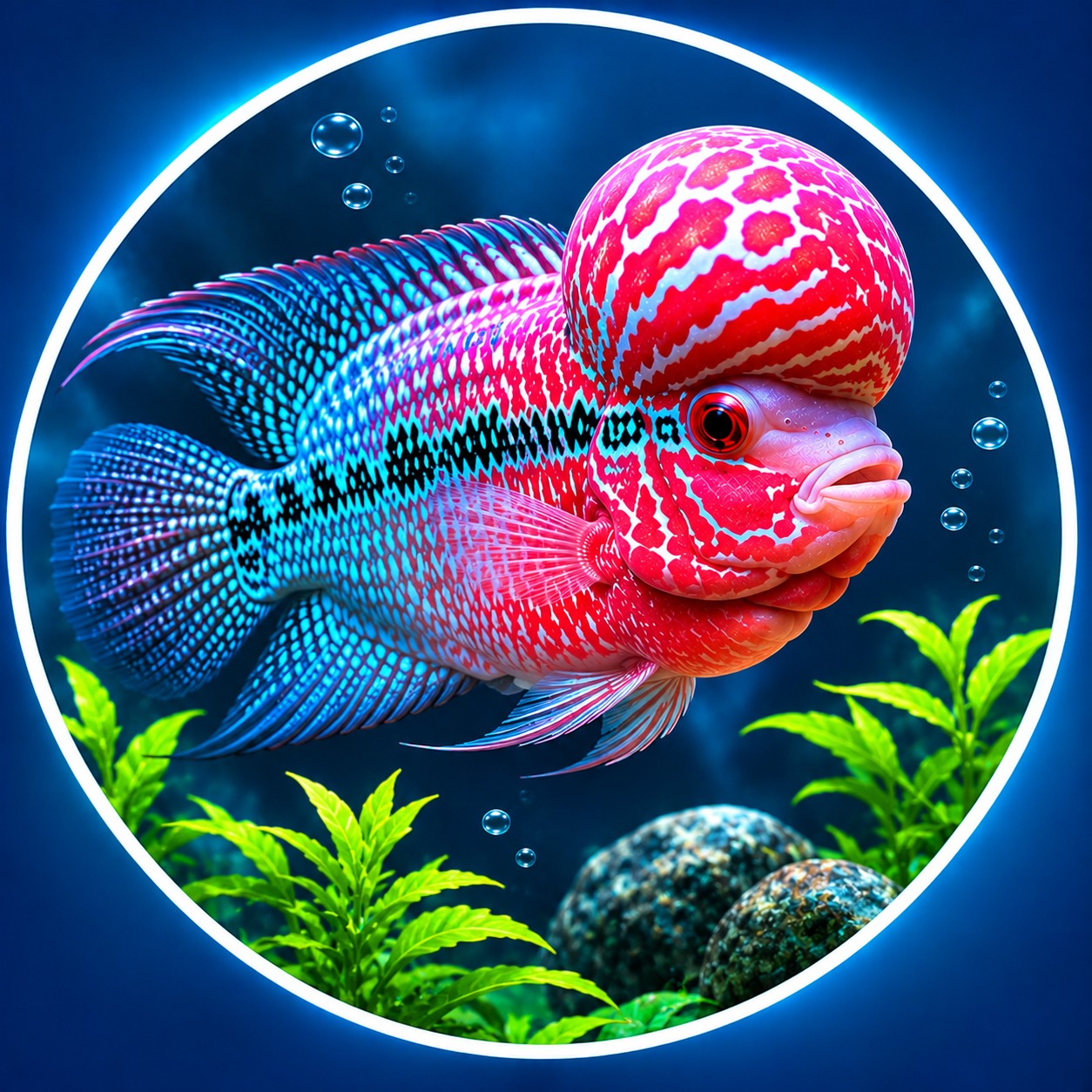
For fish such as Flowerhorns and Parrot Fish, suitable filtration and reliable equipment are especially important because these fish can produce considerable waste and need an appropriately maintained aquarium.
However, beginners often find it difficult to decide which filter, heater, air pump or other equipment they actually need. Buying the most expensive equipment is not always necessary. What matters is choosing products that suit the aquarium size, fish species and maintenance requirements.
In this guide, you will learn about the essential aquarium equipment, how it works and what to consider before buying it.
1. Why Is Aquarium Equipment Important?
Aquarium equipment helps create a stable environment for fish living in a closed aquatic system.
The main benefits include:
Water filtration: Helps remove waste particles and supports beneficial bacteria.
Temperature control: Helps maintain a suitable temperature for the fish.
Oxygenation and water movement: Supports gas exchange and circulation.
Water quality monitoring: Helps identify conditions that may affect fish health.
Convenient maintenance: Makes cleaning and routine aquarium care easier.
Equipment works best when combined with appropriate feeding, regular water changes and proper aquarium maintenance.
2. Aquarium Filters: Which Type Is Best?
A filter is one of the most important pieces of equipment in most aquariums. It helps remove suspended waste and provides surfaces where beneficial bacteria can develop.
These bacteria support the aquarium’s biological filtration by processing toxic ammonia and nitrite through the nitrogen cycle.
Sponge Filters
Sponge filters use an air pump to draw water through a porous sponge.
Advantages:
Simple construction and easy maintenance.
Provide surfaces for beneficial bacteria.
Gentle water movement.
Useful for small aquariums, quarantine tanks and certain breeding setups.
Limitations:
May not provide sufficient mechanical filtration for a large, messy fish.
Can take up space inside the aquarium.
A sponge filter can be useful in suitable setups, but larger aquariums containing Flowerhorns may need a more powerful filtration system.
Hang-On-Back Filters
Hang-on-back filters, often called HOB filters, attach to the outside of an aquarium. Water is drawn into the filter, passes through the filter media and returns to the tank.
Advantages:
Limitations:
A HOB filter can be a practical option for smaller aquariums when its capacity suits the fish and the aquarium’s waste load.
Canister Filters
Canister filters sit outside the aquarium and circulate water through filter media housed inside a canister.
Advantages:
Often provide substantial space for different filter media.
Can support mechanical, biological and chemical filtration.
Keep most equipment outside the aquarium.
Suitable models can handle larger aquariums and heavier waste loads.
Limitations:
Usually cost more than basic filters.
Require correct installation and regular maintenance.
Hoses, seals and connections must be checked for leaks.
For a large Flowerhorn or Parrot Fish aquarium, a properly sized canister filter can be a useful option.
Internal Power Filters
Internal power filters operate inside the aquarium and use a motor to circulate water through filter media.
They can be convenient for smaller tanks or particular aquarium setups. However, the available media space and flow rate should be considered before choosing one for a large fish.
3. Understanding the Three Types of Filtration
A good aquarium filter may use several types of filtration together.
Mechanical Filtration
Mechanical filtration traps suspended particles such as uneaten food and visible waste. Sponges, filter pads and similar materials are commonly used for this purpose.
Clean or replace mechanical media according to the manufacturer’s instructions and the aquarium’s needs.
Biological Filtration
Biological filtration provides surfaces for beneficial bacteria that help process ammonia and nitrite.
This is essential because ammonia and nitrite can be harmful to fish. Biological media should be maintained carefully to avoid unnecessarily damaging the beneficial bacterial population.
Chemical Filtration
Chemical filtration uses materials such as activated carbon to remove certain dissolved substances.
It can be useful in specific situations, including removing some unwanted compounds or residues. However, activated carbon is not essential for every aquarium and does not replace biological filtration or water changes.
Important: A filter does not remove every unwanted substance from aquarium water. Regular maintenance and water testing remain necessary.
4. Aquarium Heaters and Thermometers
An aquarium heater helps maintain a suitable water temperature when the surrounding environment becomes too cold or fluctuates significantly.
Before choosing a heater, consider:
Aquarium water volume.
Room temperature.
Temperature requirements of the fish.
Heater wattage and manufacturer’s recommendations.
Safety features and installation instructions.
A thermometer is also important because the heater’s setting does not always tell you the exact water temperature.
For Flowerhorns and Parrot Fish, maintain a stable temperature within the appropriate range for the fish you keep. Avoid making sudden temperature changes.
Never operate equipment outside its intended conditions, and follow the manufacturer’s instructions for installation and maintenance.
5. Air Pumps and Air Stones
An air pump moves air through airline tubing and can operate an air stone or sponge filter.
Air stones release air as bubbles, helping create water movement and surface agitation. Surface agitation supports gas exchange, which helps oxygen enter the water and carbon dioxide leave it.
Air pumps can be especially useful when:
The aquarium has limited surface movement.
Additional aeration is needed.
A sponge filter is being used.
The fish load and aquarium conditions require more gas exchange.
Remember that bubbles alone do not guarantee sufficient dissolved oxygen. Water movement, temperature, stocking, filtration and other conditions also matter.
6. Aquarium Lighting
Aquarium lighting helps you observe your fish and display their natural colours. It is also important when the aquarium contains live plants.
When choosing an aquarium light, consider:
Tank dimensions and light coverage.
Adjustable brightness.
The needs of live plants, if present.
A consistent daily lighting schedule.
Heat output and equipment safety.
For a fish-only aquarium, a suitable LED light is often a practical choice. Extremely bright lighting or unnecessarily long lighting periods may contribute to algae growth or discomfort in some setups.
Provide a regular dark period instead of leaving aquarium lights on continuously.
7. Water Testing Kits and Essential Supplies
You cannot judge aquarium water quality by appearance alone. Water may look clear while still containing harmful levels of ammonia or nitrite.
Useful water-testing supplies include tests for:
Ammonia: Should remain at undetectable levels in an established, functioning aquarium.
Nitrite: Should also remain at undetectable levels.
Nitrate: Helps you monitor waste accumulation and maintenance needs.
pH: Helps you understand the acidity or alkalinity of the water.
Depending on your water source and fish requirements, additional tests for hardness or other parameters may be useful.
Other helpful supplies include a water conditioner suitable for your water source, a siphon or gravel vacuum, a dedicated aquarium bucket and cleaning tools.
Use water conditioner according to its label, especially when preparing tap water that contains chlorine or chloramine.
8. How to Choose Equipment for Flowerhorn and Parrot Fish
Flowerhorns and Parrot Fish can produce considerable waste, so filtration capacity and regular maintenance deserve particular attention.
Before purchasing equipment, consider the following:
Aquarium Size
Choose equipment suitable for the aquarium’s actual water volume. A filter marketed for a particular tank size may perform differently depending on fish load, feeding and the type of filter media used.
Waste Production
Larger fish and heavier feeding can increase the waste load. An aquarium with a messy fish may require more filtration capacity and more frequent maintenance than a lightly stocked tank of the same size.
Filter Media Capacity
Look beyond the advertised flow rate. The space available for mechanical and biological media also matters.
Water Flow
Choose a filter that provides suitable circulation without creating an unnecessarily strong current throughout the aquarium. Observe whether your fish can swim and rest comfortably.
Maintenance Requirements
Consider how easy the filter is to clean, how often its media needs attention and whether replacement parts are readily available.
A suitable filter is one that supports stable water quality and can be maintained consistently.
Frequently Asked Questions